The UK government has unveiled plans to introduce one of the world’s strictest social media regulations by banning children under the age of 16 from accessing major social media platforms. The proposal aims to protect young people from harmful online content, cyberbullying, and excessive screen time, but it has also sparked widespread debate about privacy, enforcement, and digital freedom.
What Is the New Social Media Ban?
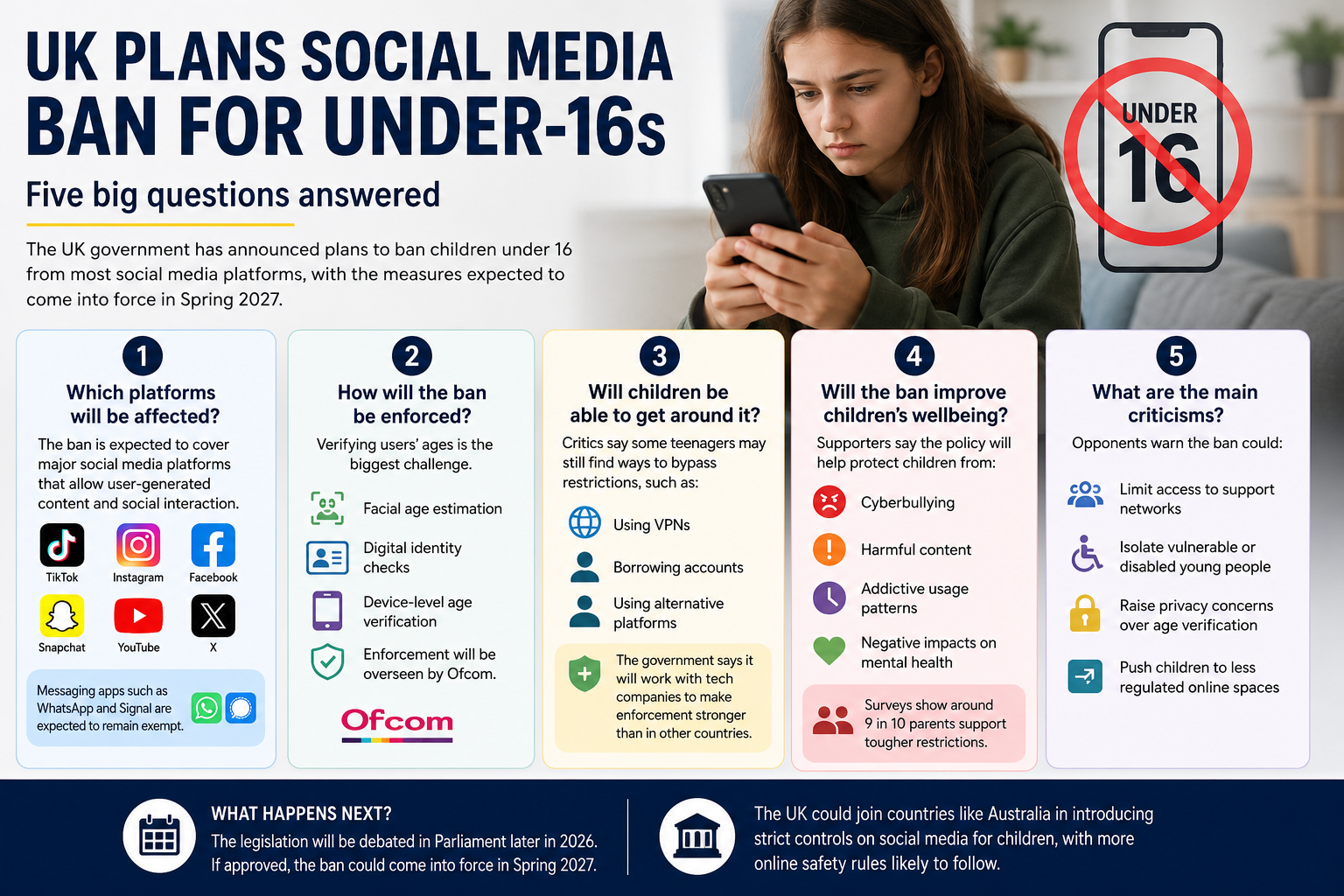
Under the proposed legislation, children under 16 would be prohibited from creating or maintaining accounts on major social media platforms, including TikTok, Instagram, Snapchat, Facebook, YouTube, and X (formerly Twitter). The government says the move is part of a broader effort to create a safer online environment for young people.
Messaging services such as WhatsApp and Signal are expected to remain exempt from the ban, allowing children to stay connected with family and friends.
Why Is the UK Introducing the Ban?
Government officials argue that social media has become increasingly harmful to children’s mental health and wellbeing. Concerns include:
- Cyberbullying and online harassment
- Exposure to inappropriate or harmful content
- Social media addiction and excessive screen time
- Negative impacts on self-esteem and mental health
- Contact with strangers online
Prime Minister Keir Starmer stated that the initiative is designed to “give children their childhood back” and help parents regain greater control over their children’s online activities.
How Will the Ban Be Enforced?
One of the biggest challenges facing the proposal is age verification.
The government is considering several methods, including:
- Facial age estimation technology
- Digital identity verification
- Device-level age checks
- Enhanced platform verification systems
The UK’s communications regulator, Ofcom, would be responsible for overseeing compliance and ensuring social media companies enforce the rules effectively.
Can Teenagers Circumvent the Restrictions?
Critics point out that many young users may attempt to bypass the ban using:
- VPN services
- False age declarations
- Accounts created by adults
- Alternative online platforms
While the government acknowledges these concerns, officials say they are working with technology companies to create stronger safeguards than those currently used in other countries.
What Are the Main Criticisms?
Although many parents support tougher online protections, opponents argue that a blanket ban could create new challenges.
Some concerns include:
- Reduced access to online support communities
- Isolation for vulnerable or disabled young people
- Increased privacy risks from age-verification systems
- Migration of teenagers to less regulated platforms
Digital rights advocates have also raised questions about how much personal information users may need to provide to verify their age.
When Could the Ban Take Effect?
The legislation is expected to be debated in Parliament later this year. If approved, the new rules could come into force in Spring 2027.
The UK would join a growing list of countries considering stricter controls on children’s access to social media, reflecting increasing global concern about the impact of digital platforms on young people.